


A language model predicts the next piece of text. It does not look things up.
That distinction matters in the clinic because fluent output can still be wrong, and the person who signs the note still owns the result. Most writing about these tools comes from people who never sign a clinical note or run around in a clinic every day.
What is a large language model?
A large language model is a neural network trained on massive amounts of text to predict and generate human-like language. It can answer questions, draft prose, and help with reasoning tasks. It is still doing prediction at the core.
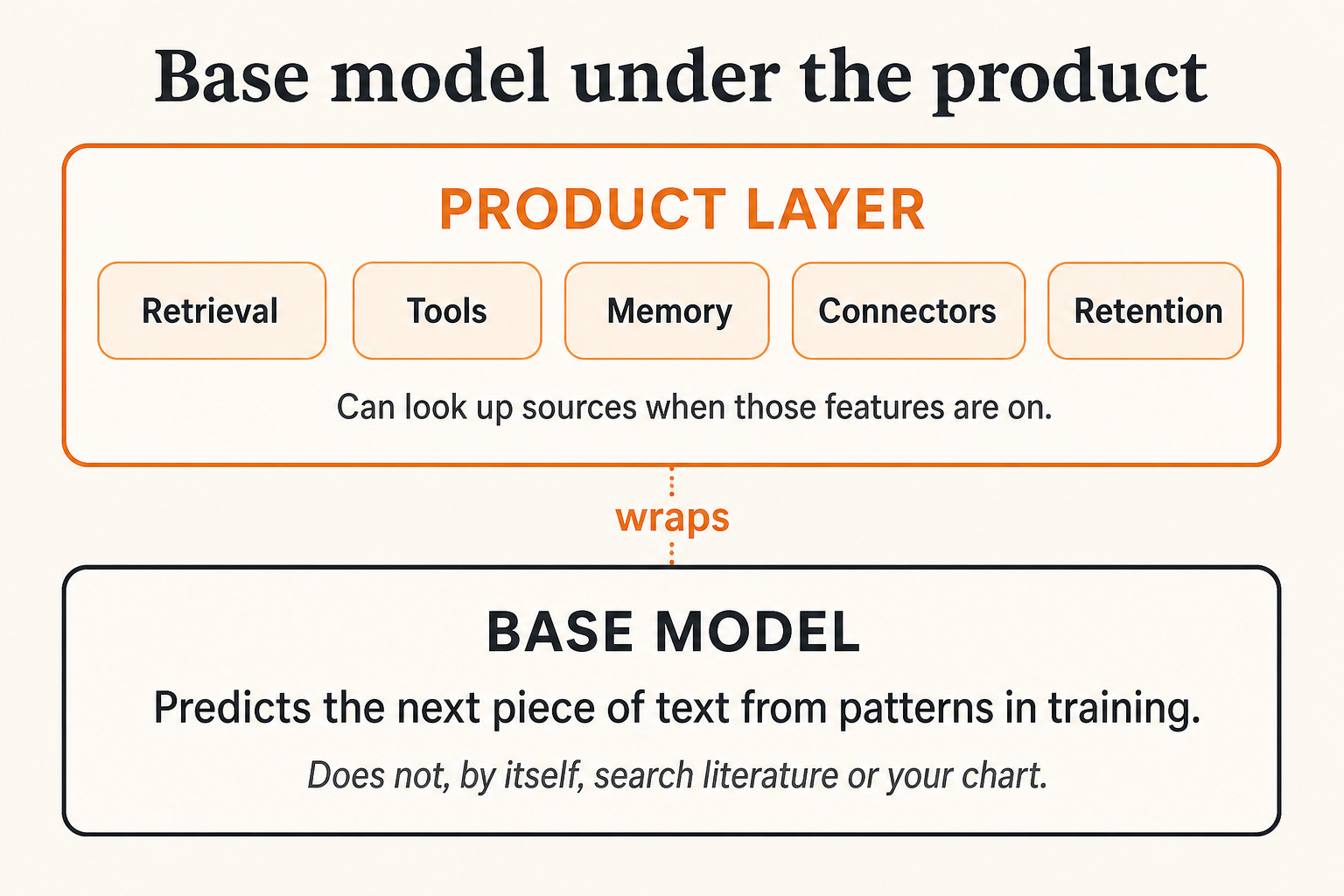
ChatGPT, Claude, Gemini, and the rest wrap that engine in a product layer: tools, retrieval, memory, connectors, retention settings. The product can look up sources. The base model still predicts.
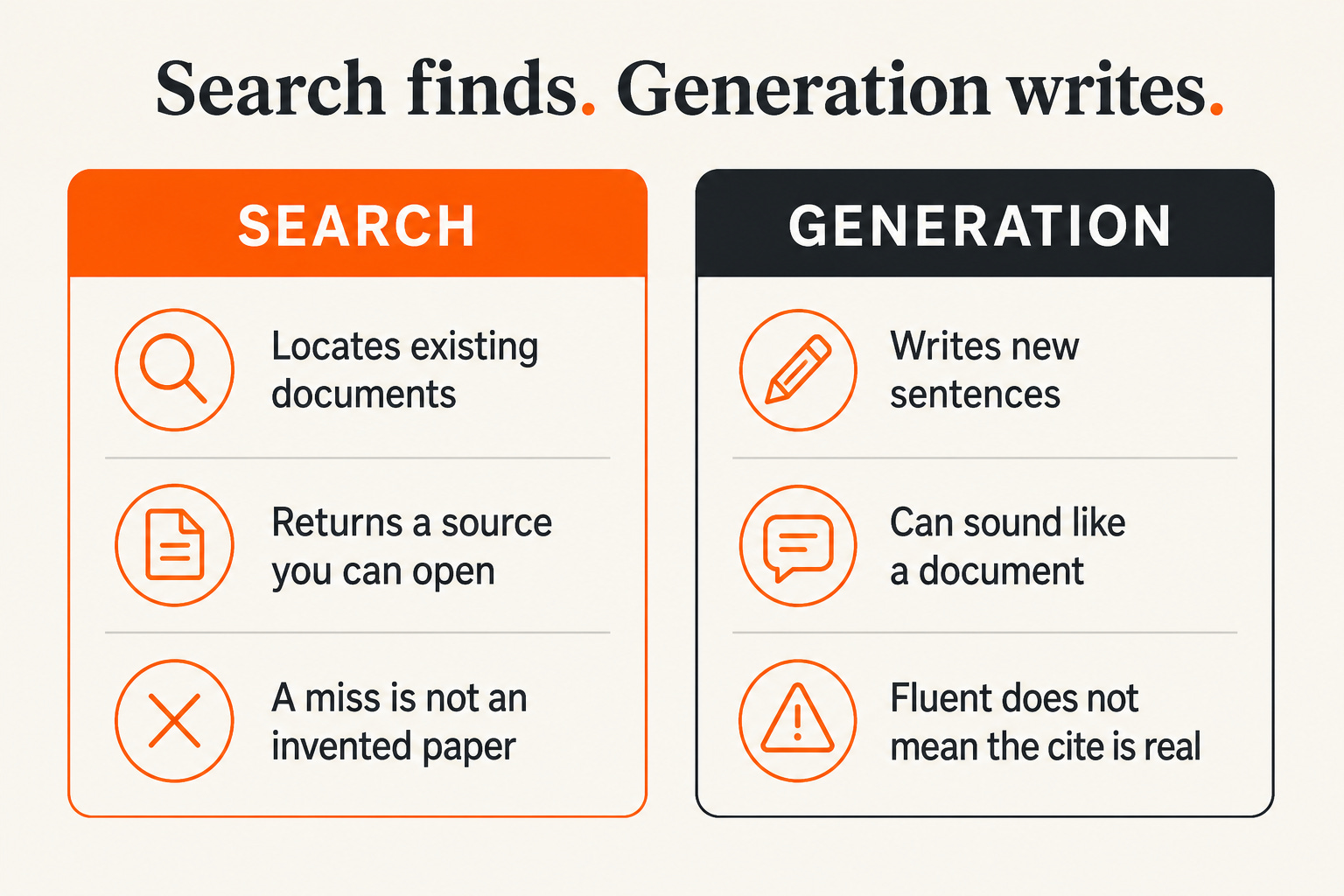
Search finds documents. Generation writes new sentences that sound like documents. Ask a product without retrieval to summarize a guideline you did not paste, and you are not getting a lookup. You are getting a fluent reconstruction from training. That can produce a clean-looking citation that was not the paper you thought you were reading. Check the sources before anything consequential leaves the desk.
A few terms that change how you use it
Tokens are the billed chunks. The context window is working memory for a turn. If the note, the guideline, or the lab values are not in that window, the model is guessing from training, not from your case. Paste what matters for the task. Keep identifiers out of consumer tools. More relevant detail usually helps. Too much irrelevant detail can also confuse the model and raise the chance of fluent error.
Training is the frozen school period, including a cutoff date. Inference is what happens when you hit send. The model does not learn from yesterday’s chat unless you put that material back into the window or the product has a separate memory feature you have actually turned on and reviewed.
A useful prompt is a work order: task, context, constraints, format, and sources to use. “What do I do next” is not a work order. “Draft a one-page patient explanation of adjuvant endocrine therapy for a breast clinic visit, eighth-grade reading level, no dosing, cite the pasted NCCN excerpt” is a work order. Then check the output against the source you named and against what you know. Stay in the loop.
Hallucination and ownership
Hallucination is fluent, confident error: an invented cite, a misread cite, an answer filled in where knowledge is thin, or a reasoning slip that still sounds finished. Better models and better products reduce some of that, and the pace of improvement is real. They do not remove ownership.
Layered controls help:
retrieve or paste the source
constrain the task
require citations you can open
keep a human verification step for consequential work
Machine learning learns from data. Deep learning is a thick stack of that, with a very large number of parameters and behavior that is hard to inspect end to end. Generative systems make new text or images. An LLM is the text engine. An agent can take steps across tools, not only answer. Useful still does not mean autonomous.
Keep clinic and personal systems from sharing data, tools, or memory.
Practical rule: treat the model like a supervised resident. Let it draft. You verify the source. You decide. Fluency does not transfer authority.
Start with the four questions before a tool touches a patient or a chart:
https://www.practicalaiforphysicians.com/p/automate-the-work-keep-the-judgment